Your External Denim Product Team for Growth Brands
What happens after you reach out
From concept to finished product — here is exactly what each stage involves, what you need to prepare, what we deliver, and where your approval is required.
Brands come to us at different stages. Some have detailed specs. Some have a reference photo and an idea. Some need to repeat a winning style. The workflow adapts to where you are — not the other way around.
Starting from an idea
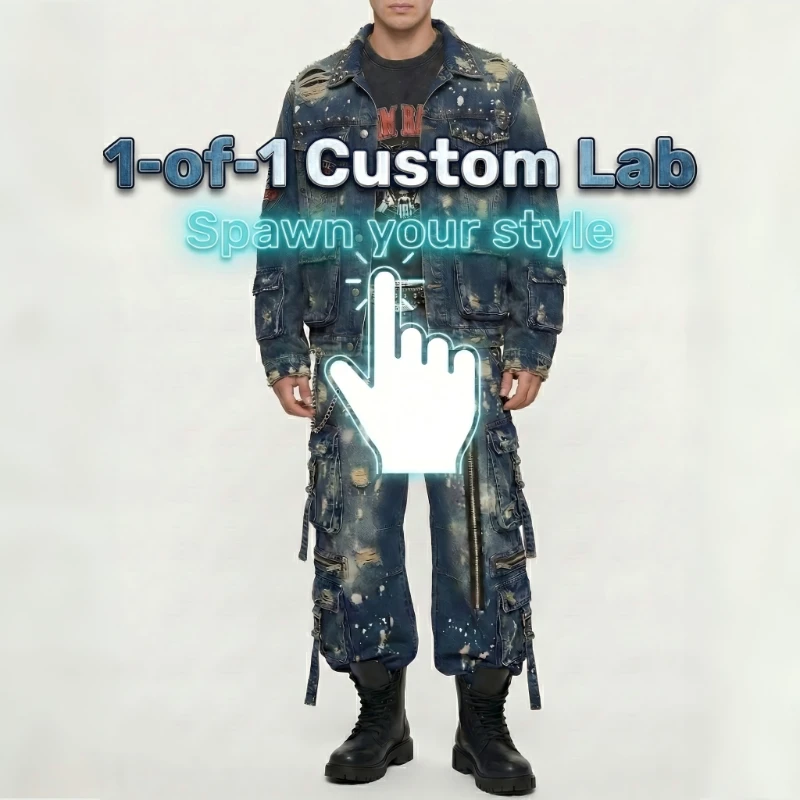
A mood board, a reference pair, sketches, or AI-generated visuals. You don’t need a tech pack — we help shape the product direction before development begins.
Starting from a tech pack
If your specs are ready or partially ready, we assess manufacturability, flag potential issues, and move straight into sourcing and development.
Starting from a reorder
If you’re repeating an approved style, the original specs stay on file. We pick up where the last order ended — same wash, same fit, same standard.
Five stages from first contact to finished product
Each stage has a clear purpose, a defined deliverable, and an approval point where you decide what happens next.
We assess construction, fabric direction, wash requirements, trims, and manufacturability. If details are missing or unclear, we help refine them before quoting — not after.
You receive:
An estimated sample charge or production quote with a clear breakdown. Your approval is required before anything moves forward.
After your confirmation, we source the right fabric and trims, align sizing information, and finalize the sample sheet. This is the last checkpoint before cutting begins.
Your approval point:
Fabric direction and sizing confirmed before development starts. No cutting without sign-off.
We develop the sample, inspect it in-house, and send you detailed photos or the physical piece. Fit, wash, construction, and presentation are reviewed against the original brief.
Your approval point:
You approve the sample, request revisions, or confirm for production. Bulk does not move forward until you sign off on the sample result.
Production runs under our QC system. Inspection is built into the workflow — not added after the fact. We manage packaging, labeling, and shipment coordination.
What stays on file:
Every approved specification — construction, wash recipe, sizing, trims — remains on record. When you reorder, nothing needs to be re-explained from scratch.
What to prepare before we start
The more complete your information is, the faster we can evaluate and move into development. But you don’t need everything ready — incomplete briefs are normal, and we help fill in the gaps.
Design Direction
Tech pack, sketch, mockup, reference garment, AI visual, or clear front/back/side reference images.
Sizing Information
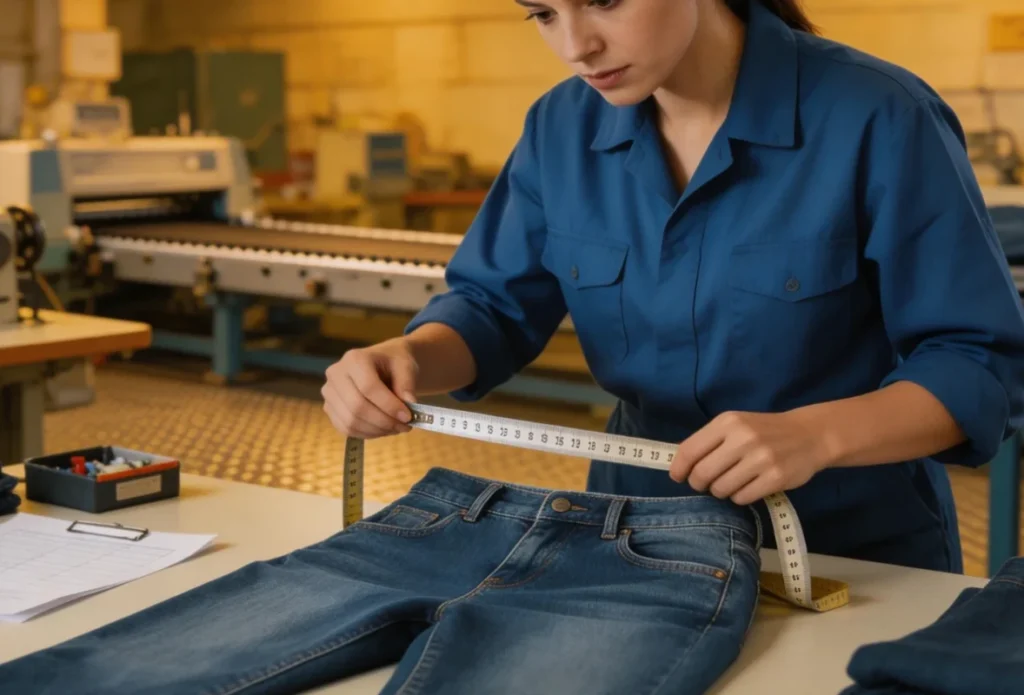
Size chart, sizing reference, or target fit direction so we can align measurements before cutting.
Branding & Trims
Logo files, label requirements, hardware direction, packaging needs, or existing trim references.
Commercial Scope
Sample only or bulk? Expected quantity, target market, and delivery window.
How long each stage typically takes
Timelines depend on fabric availability, wash complexity, and revision rounds — but these are the working benchmarks we plan around.
10H
Initial project response
We review your brief and confirm feasibility
72H
VIP rush sample
For urgent projects with confirmed specs
3–7D
Standard sample development
Pattern, cut, sew, wash, inspect, photograph
15–22D
Bulk production after approval
Cutting, sewing, washing, QC, packing, shipment
Complex washes, custom hardware, and multiple revision rounds can extend the timeline. Repeat orders are usually faster because approved specs stay on file.
What you see along the way
You should never have to guess where your project stands. At every critical stage, you receive a confirmation, a deliverable, or a request for your approval — not silence.
Structured checkpoints, not random updates
Progress is confirmed at the moments that matter: before sampling, after sample review, before production starts, during QC, and before shipment. You know what’s happening and what still needs your decision.
Quality checks you can actually see
Inspection is integrated into the production workflow — not treated as a formality at the end. You receive QC documentation that shows what was checked, what was measured, and what was approved.
Reorders that don’t start over
Approved wash recipes, measurements, construction details, and QC baselines carry forward automatically. When you reorder, there is no re-learning, no re-explaining, and no drift.
That’s normal — many brands start without one. You can begin with sketches, reference photos, a sample garment, or even a mood board. Our team helps clarify construction, measurements, fabric direction, and wash details before development begins.
At minimum: reference images or a description of what you want to make, your target quantity, and a rough timeline. The more detail you provide — sizing, fit direction, wash preference, branding — the faster we can move. But we can guide you through what’s missing.
Standard samples take 3–7 working days depending on design complexity, fabric availability, and wash requirements. VIP rush samples can be completed in 72 hours for urgent projects with confirmed specs.
The approved construction, wash recipe, sizing, trims, and packaging requirements are locked in and carried into production. QC uses the approved sample as the reference standard for bulk — so what you signed off on is what gets produced.
You receive structured updates at each key milestone: after project assessment, after sample completion, before production starts, during QC, and before shipment. You always know what stage the project is in and what still needs your approval.
The main factors are fabric availability, custom trim lead times, wash complexity, how many revision rounds are needed, and how quickly you confirm approvals. Repeat orders are usually faster because all approved specs are already on file.
Yes. Once a style is approved, every key specification stays on record — wash recipe, measurements, construction details, QC baseline. That means repeat production starts from where the last order ended, not from a blank slate.
Yes. New brands benefit from clearer step-by-step guidance and development support. If you don’t have denim production experience, the structured workflow helps you move forward without having to figure out each stage on your own.
Ready to start your denim project?
Tell us what you’re making — a first collection, a new style, or a repeat order — and we’ll walk you through what happens next.